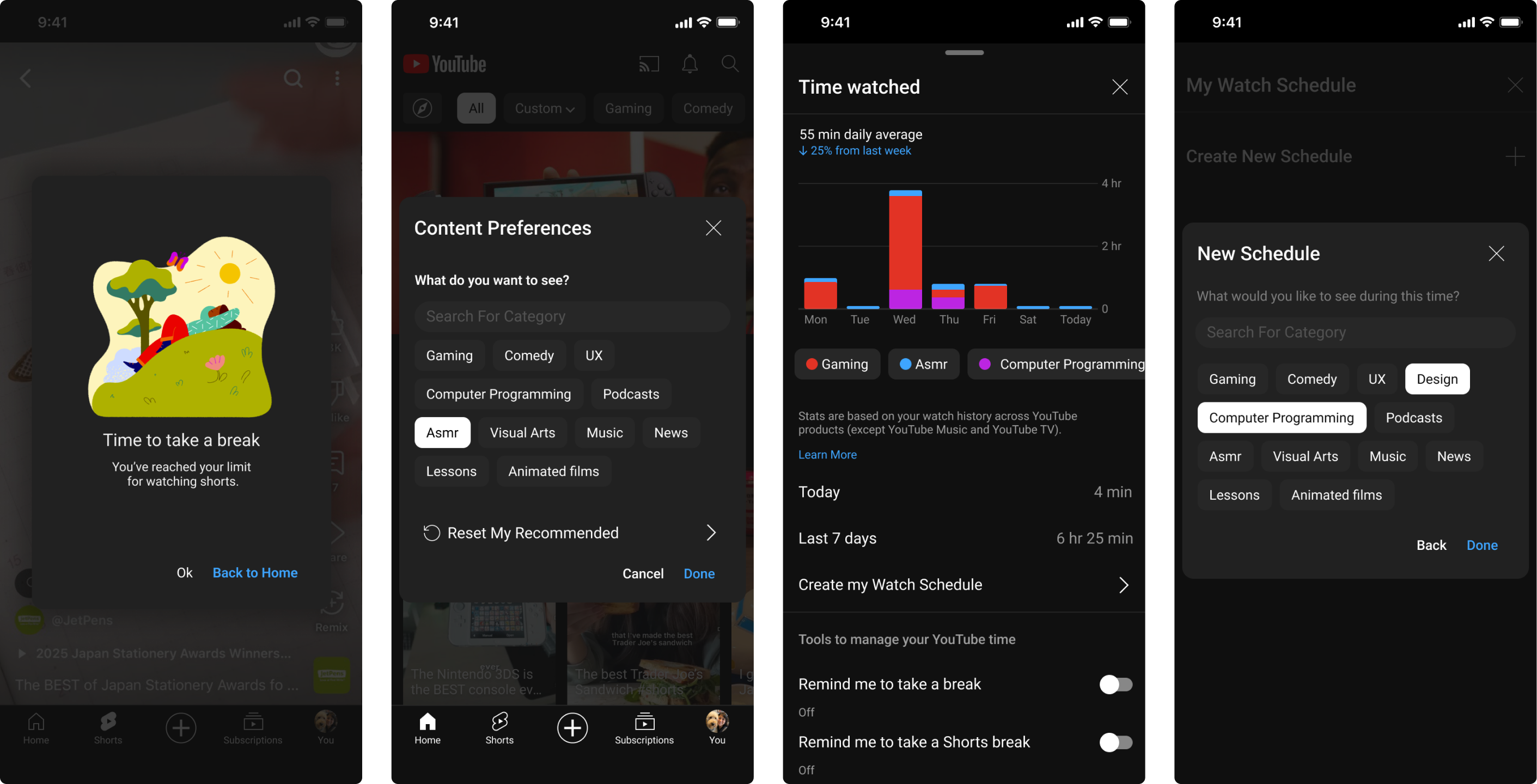
Mindful viewing on YouTube
A feature concept exploring how YouTube could give users transparency and control over how they spend their own time more intentionally.
Technology should improve life, not distract from it.
YouTube's wellness page for adults now only exists in an archive. The wellness tools that exist aren't promoted inside the app; they're surfaced by the App Store. The ones YouTube actively develops are built for users under 18.
What would it look like if they upheld these values for everyone?
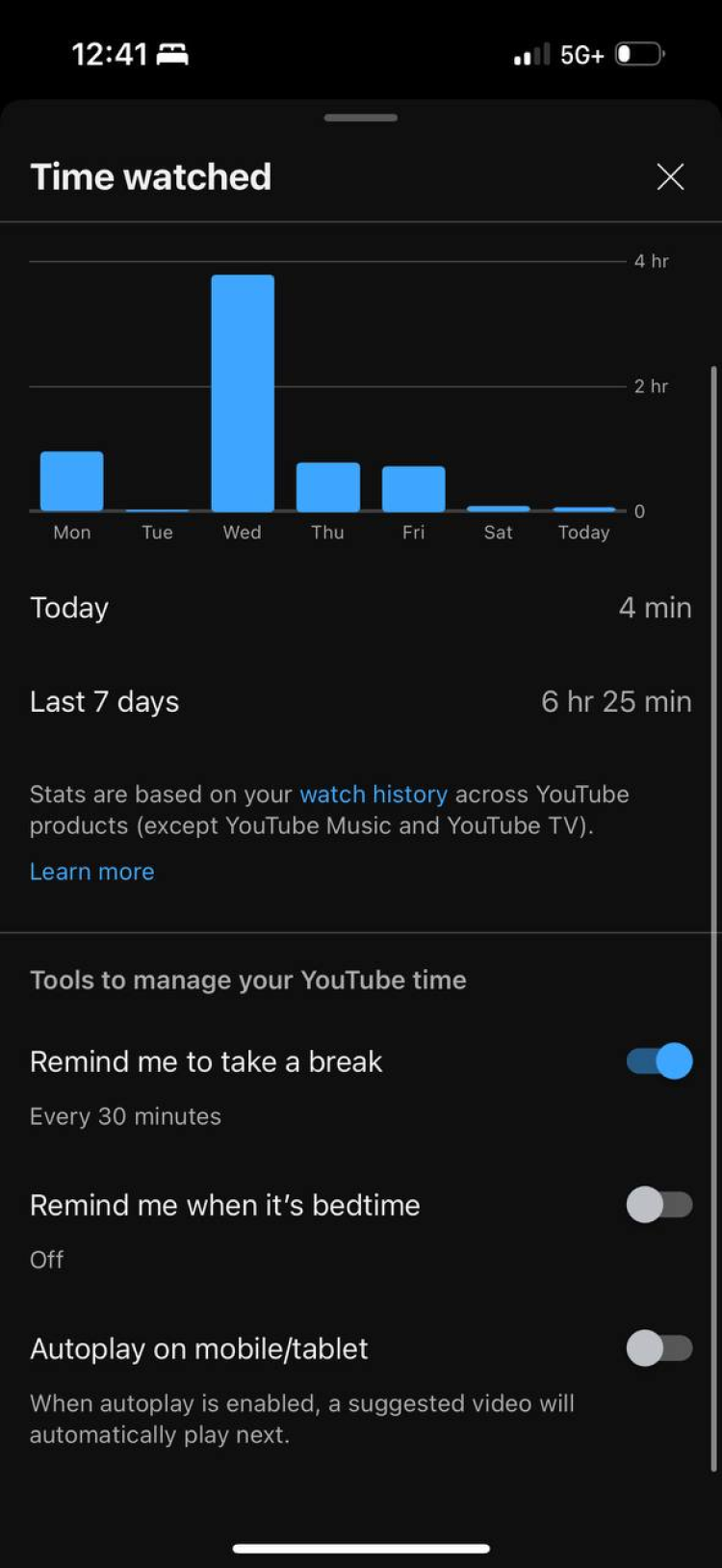
Original YouTube Time watched wireframe beside the Watch schedule flow design.
Shorts break design
Content preferences hi-fi design
What this enables
-
Increased platform trust Giving users visibility into their own behavior signals that YouTube respects how they spend their time.
-
Fewer people leaving feeling guilty Users who feel in control of a session are less likely to associate the platform with lost time and disengage.
-
More intentional, habitual engagement Mindful viewing patterns create sustainable usage.
YouTube is ingrained in people's routines
Over 122 million people open YouTube every single day. It acts as a motivator throughout the day, from learning, leisure, and background noise.
These tasks often blur into unintended hours of viewing. Dark patterns such as autoplay, infinite scroll, and algorithmic recommendations are engineered to maximise watch time at the direct expense of the viewer's own intentions.
"I feel less tired to do a task when using YouTube, it doesn't feel as draining."
— 18-year-old student
"Sometimes when I'm not in a good mental space, I'll watch videos where they're really relatable. They make me feel better because I need authenticity."
— 20-year-old college student
People came for one thing, stayed for another, and lost track of where their time went.
People know they want a healthier relationship with YouTube. App blockers and screen time limits don't stick because they live outside the platform, adding friction without building any real awareness of how time was actually being spent.
"It impacts my productivity. Sucks you in, doesn't let you out — and by the time you get out you are already exhausted."
— 25-year-old interviewee
Understanding current relationships and feelings with the platform
I surveyed 15 people that use YouTube daily and interviewed 3 in North America, aged 18–34.
From the interviews:
How might we help YouTube users watch with more intention and control, so they feel good about the time they spent?
Early concepts
Focus mode
This feature would allow users to only enable a single kind of content until the focus timer ends.
- Selecting a content tag, a start, and an end time every session requires too much effort
- Users mentioned restricting to one singular time block and content type feels too restricting
- Doesn't build long-term awareness or regulation
- Frames YouTube as something that needs to be restricted rather than used intentionally
Manage content preferences
This feature allows users to manage the content they will see & turn off YouTube Shorts.
- More friction is needed to restrict YouTube Shorts viewtime. "Being able to toggle off Shorts easily might make me turn it back on"
- Muting entire content categories and hiding Shorts is not feasible. It bends platform goals and directly removes revenue-generating features, which would not ship
Habit schedule
This concept had the most potential because it directly addresses the need for balance and long-term regulation.
- Aligning viewing preferences only to "morning, afternoon, night" did not feel flexible to users
- The Habit Schedule relies on the Time Watched screen that currently doesn't give enough context to make informed decisions with it
Refining three feasible directions
I moved into mid-fidelity to test how each direction would actually feel inside YouTube's existing UI patterns. I tested my mid-fi prototypes with users given task scenarios.
Break reminders for Shorts
A configurable reminder that surfaces after a set number of Shorts, giving users a moment to decide whether to keep watching.
- Wording for the reminder is a bit awkward, maybe try "you've reached your limit."
- "This is useful because I would like to be stopped, especially w the endless scroll feature that YouTube adopted."
- "Maybe okay should be where it's more inconvenient, so closing the modal would be more effort."
Filtering your home feed
A preferences sheet that lets users select which content categories appear on their home feed.
- "I'm wondering if the filter button should be separate. How would they go back if they want to see all of the videos again?"
- "I always find that I look through the automated filters they have set and sometimes they don't have the category I want."
- "Maybe there should be an option to type in your own."
Scheduling intentional viewing time
A watch schedule builder that lets users define when and what they want to watch, tied to their existing Time Watched data.
- Rated 10/10 for ease of use.
- "I think this is a really useful feature and I like that it's each step at a time rather than it all being on one page."
- "I think it would help me focus when I'm using YouTube for more serious tasks like education or work rather than leisure. It would definitely eliminate distractions."
- "I like how you can customize to what specific type of content you can see so YouTube doesn't become a wormhole of videos."
Bringing more intention into everyday viewing preferences
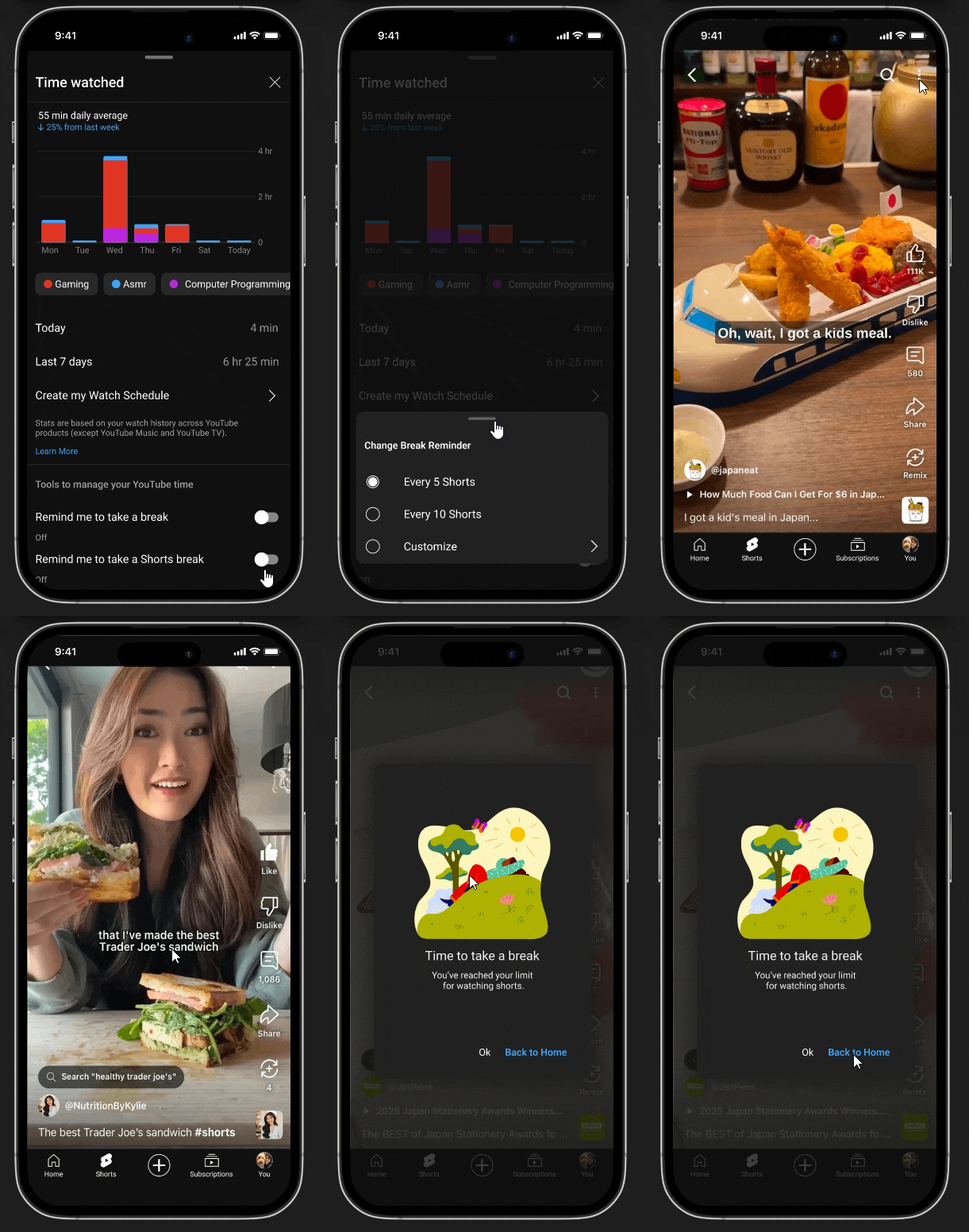
YouTube Shorts reminders
Adjustable reminders to give users more intention and reflection into how they spend their time.
Using friction as a way to result in more intentional choices.
Business outcome Reduced burnout and better retention as users feel more in control of their viewing.
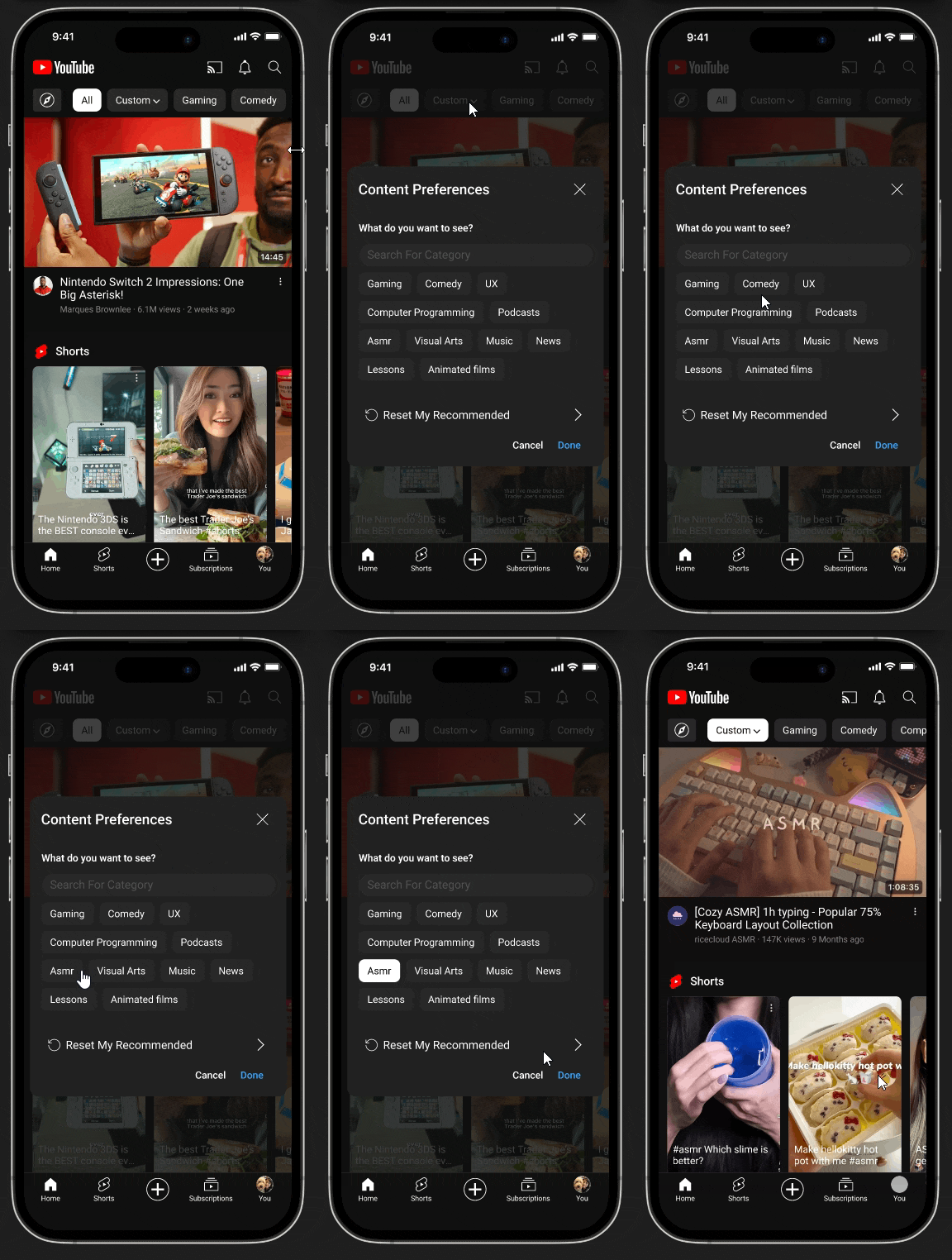
Content preferences
Allow users control over the content they see.
Giving intention and control over the content they are recommended to watch on the home page.
Business outcome Personalization creates more focused monetization opportunities. Users get fewer ads; ad partners get more valuable engagement because ads reach the right audiences. Users have a better experience, spend less time browsing and scrolling, and more time watching videos, which can lead to stable revenue growth.
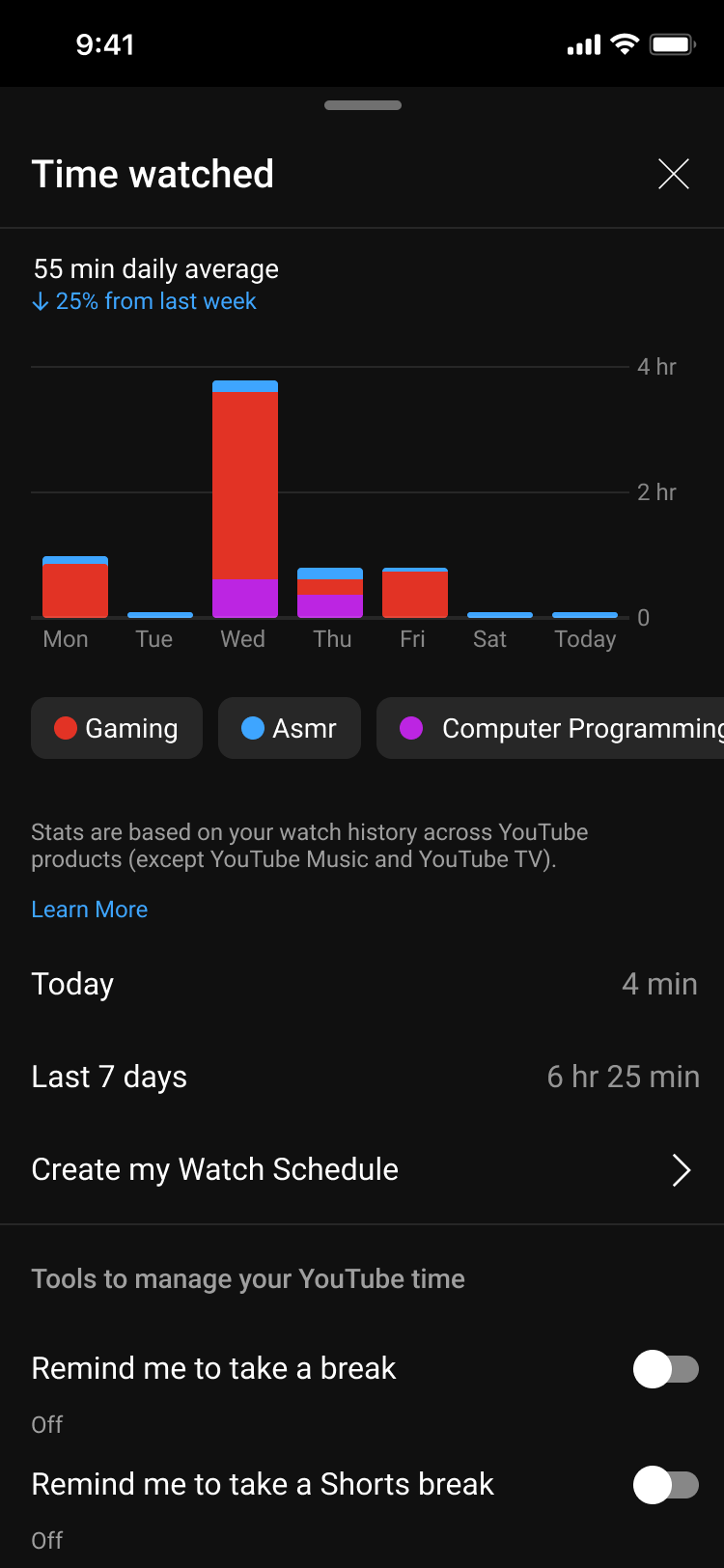
Time watched breakdown
Using detailed data visualization to reflect on usage patterns.
Business outcome Clearer visibility into watch habits builds trust and encourages more deliberate engagement with the platform.
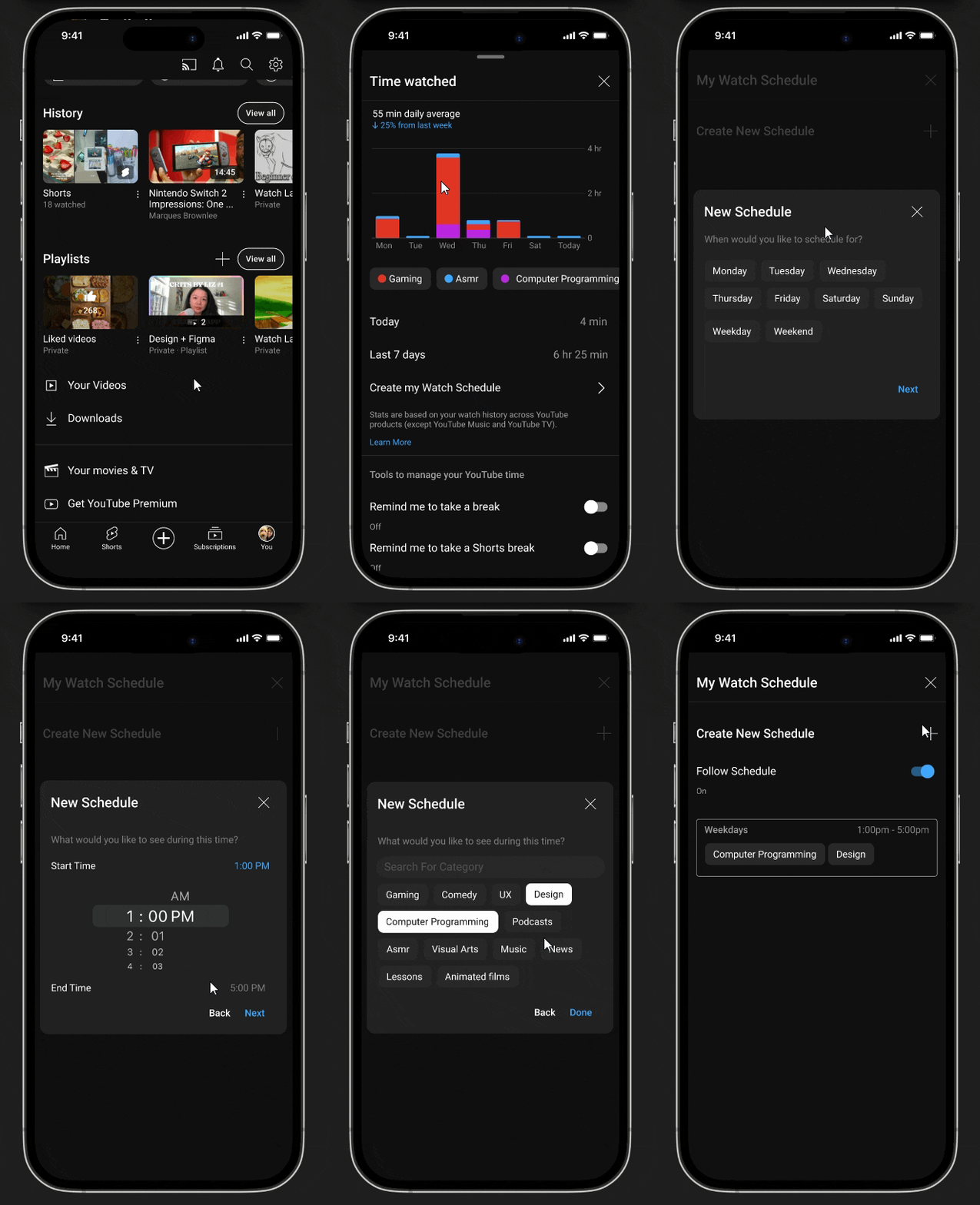
Watch schedule
Adjustable preferences in the form of time blocks to give users intentional control over their watch habits throughout each day. Providing users with the ability to enable goal focused choices.
Business outcome Intentional viewing leads to higher quality watch time and stronger retention as users align their habits with their goals.
Reflecting a year later on this project
This project made me really consider designing with business constraints. Sometimes what users ask for isn't always feasible, so it was interesting to balance making a platform feel more intentional when its business model is built on extending view time.
- Data visualization Looking back, this is the first thing I'd want to explore further. Visualizations such as a bar or donut would be stronger in quickly interpreting information at a glance. I made some wireframes of what that might look like.
- Watch schedule If I were to go further, I would also want to figure out what an active watch schedule looks like, potentially through themes or some sort of notifier that could gently come up.
- YouTube's version Since completing this project, YouTube introduced a Shorts reminder, but their version measures time and only interrupts after 15 minutes of watching Shorts minimum, while mine measured scroll count.